
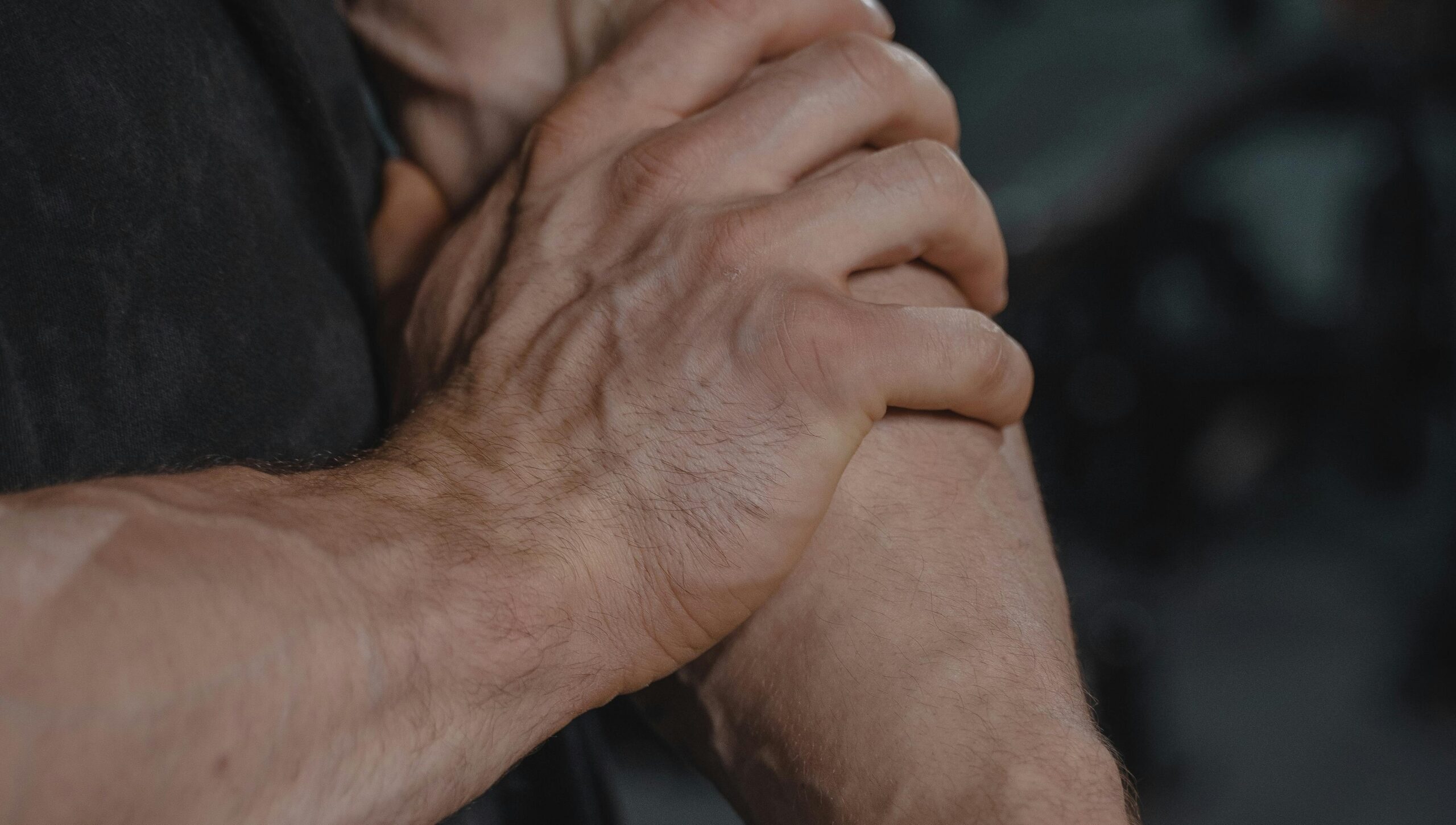
If you’ve trained Brazilian Jiu-Jitsu for more than a few months, you already know the truth: technique matters, but grips decide who gets to use their technique.
The athlete who controls sleeves, collars, wrists, and lapels dictates the pace of the roll. And when your hands fatigue, your entire game starts to collapse.
Grip strength isn’t built by accident. It’s trained deliberately, and the right tools accelerate that process dramatically.
This guide breaks down practical grip training equipment that transfers directly to the mats, showing how to use each one to build crushing power, endurance, and finger resilience.
If you’re serious about improving performance, this article pairs well with Best BJJ Gear You Should Be Using in 2026 and complements injury prevention strategies covered in BJJ Hygiene and Cleanliness: Essential Gear to Stay Healthy on the Mats.
Mygritflow.com may receive advertising or affiliate commission if you buy via our links. Read more here.
Why Grip Strength Matters in BJJ
Strong grips influence:
- Guard retention
- Passing control
- Submission finishing
- Gi manipulation
- No-gi wrist fighting
It’s not just about strength, it’s endurance, recovery, and structural balance in the hands and forearms.
Overtraining flexion without recovery work can lead to elbow pain and overuse issues, which is why balancing grip tools is essential. This connects closely to protective training covered in Best BJJ Mouthguards for Training and Competition where longevity on the mats is prioritised.
Hangboard Training (Finger Dominance & Gi Simulation)
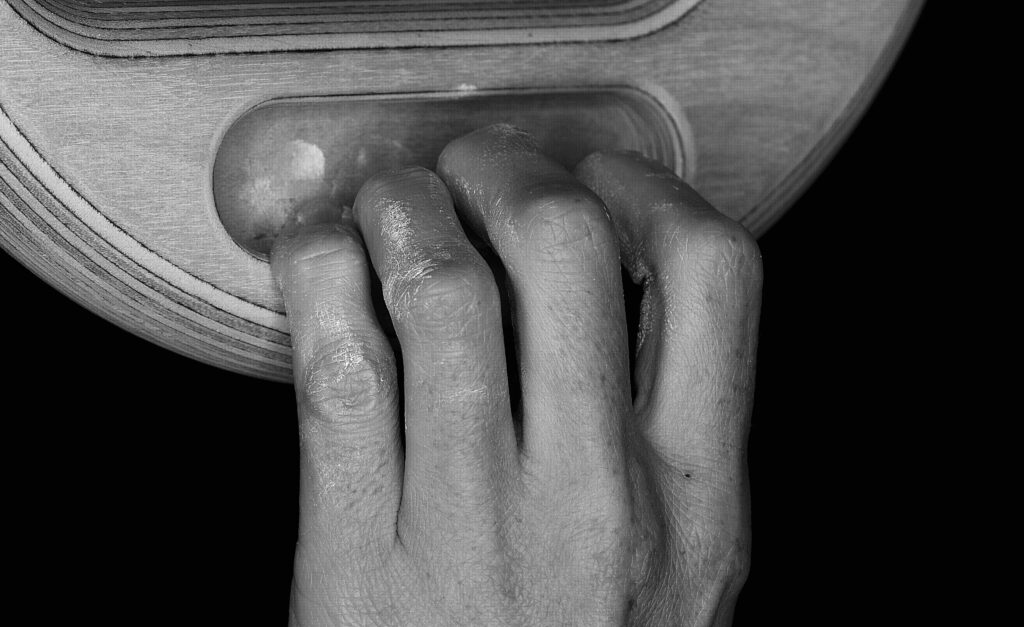
A climbing-style hangboard is one of the most direct ways to replicate gi gripping stress.
How to Use It
- Dead hangs on different edge depths
- Timed holds (10–30 seconds)
- Two-hand or offset loading
- Towel draped over edges for gi simulation
The MIMIGLOO Hangboard allows progressive loading through multiple edge depths and textures, making it useful for developing finger strength that translates to lapel and sleeve control.
Training Tip
Start conservatively. Finger tendons adapt slower than muscles.
2 sessions per week is sufficient for progression.
Thick-Bar Training (Forearm Overload)
When bars get thicker, the forearms work harder. That stress builds real grappling carryover.
Slip-on attachments like Fat Gripz Pro turn standard dumbbells and barbells into grip-intensive tools.
Best Exercises
- Rows
- Deadlifts
- Farmer carries
- Curls
These tools integrate seamlessly into general strength training, which complements equipment strategies explored in Best BJJ Gear You Should Be Using in 2026.
Resistance Bands (Grip Endurance & Recovery)
Bands are deceptively powerful for grapplers.
The Meteor Essential Power Bands enable:
- Gi pull simulations
- Wrist strengthening
- Grip endurance circuits
- Shoulder stability work
Example Drill
Anchor band → simulate sleeve pulls → high reps
This builds sustained tension capacity rather than max force output.
Adjustable Grippers (Crushing Strength)
Simple, portable, effective.
The GD GRIP PRO Adjustable Gripper is ideal for progressive overload of closing strength, critical for clamp-style gripping.
Programming
- Warm-up sets
- 3 heavy sets each hand
- Static holds on final rep
These are especially useful between sessions or during downtime.
Finger Extensor Training (Injury Prevention)
Most grapplers ignore this, and pay for it later.
The Airisland Finger Extensor Bands strengthen opposing muscles that balance grip training.
Benefits
- Reduced elbow strain
- Improved recovery
- Joint stability
- Longevity in training
This preventative mindset aligns with maintaining mat health discussed in BJJ Hygiene and Cleanliness: Essential Gear to Stay Healthy on the Mats.
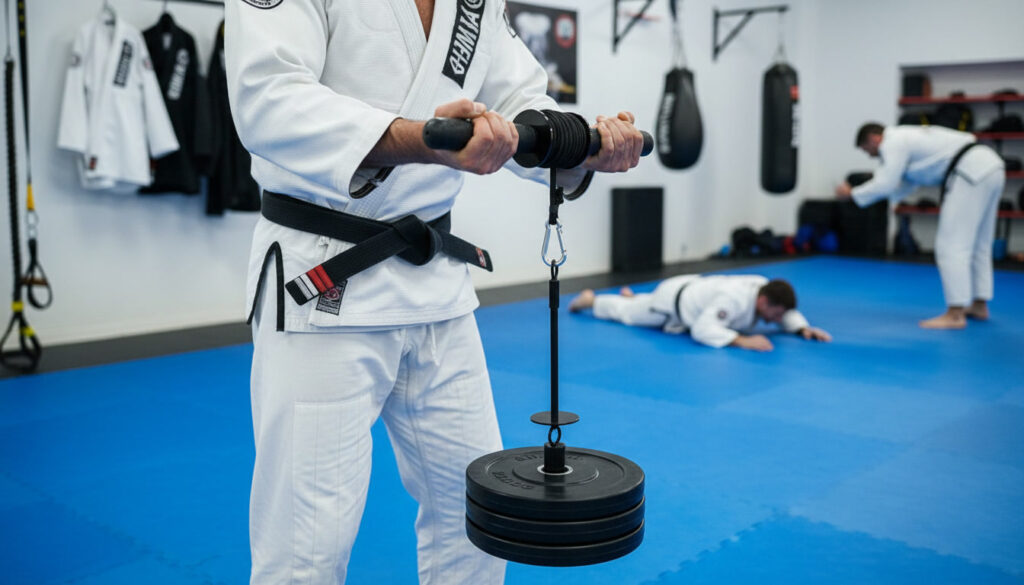
Wrist & Forearm Rollers (Integrated Strength)
Few tools tax the entire chain like rollers.
The Yes4All Wrist & Forearm Blaster trains:
- Grip
- Wrist strength
- Forearm endurance
- Stabilisation
Use slow controlled rolls for maximum effect.
This type of compound grip work supports overall grappling resilience similar to protection strategies in Best BJJ Mouthguards for Training and Competition.
Rope Pull Training (Functional Grappling Strength)
Rope training introduces unpredictable tension, closer to live grappling.
The Franklin Tug of War Rope can be used for:
- Pull circuits
- Anchored climbs
- Partner resistance drills
It develops coordination between grip and pulling mechanics.
This crossover training bridges BJJ with broader athletic development, a theme explored in Best Online BJJ Course for 2026 where structured improvement is emphasised.
How to Structure Grip Training
Beginner
2 sessions/week
10–15 minutes post-training
Intermediate
3 sessions/week
Rotate tool categories
Advanced
Integrated into strength blocks
Periodised intensity
Avoid max-effort daily work, connective tissue recovery matters.
Final Thoughts
Grip strength doesn’t just make techniques work better, it reshapes your entire grappling style. Control improves, fatigue resistance increases, and confidence rises during scrambles and exchanges.
The tools above aren’t gimmicks. They’re practical, scalable ways to accelerate development outside live training.
When combined intelligently, they build a foundation that supports everything from positional dominance to submission finishing, helping you train harder, longer, and more effectively.
Pingback: Best Home Gym Equipment for BJJ Strength & Conditioning (2026 Guide) - My Grit Flow
Pingback: Best BJJ Home Training Equipment (No Partner Required) – 2026 Guide - My Grit Flow
Pingback: 3 Day Gym Workout Routine: How I Gained 5kg of Muscle