
Table of Contents
Over the past year, I’ve put on about 5kg of lean muscle, training just three nights a week while balancing work, life, and time on the mats.
If you’re searching for a 3 day gym workout routine, this is the exact system I’ve used consistently. It’s simple, efficient, and built around progressive overload rather than unnecessary complexity.
Strength training has complemented my Brazilian Jiu-Jitsu without dominating my schedule. The goal wasn’t bodybuilding. It was becoming stronger, harder to move, and more resilient physically.
This is the approach that worked for me.
Mygritflow.com may receive advertising or affiliate commission if you buy via our links. Read more here.
Why I Train This Way
I train 3 times per week, alternating between two workout types:
- Legs & Shoulders
- Chest & Back
I don’t isolate smaller muscles like biceps or triceps directly. They’re hit as collateral through compound movements.
I superset most exercises (stacked directly on top of each other) because:
- Opposing muscle groups recover while the other works
- I maintain high intensity
- Workouts stay time-efficient
- Heart rate remains elevated
The structure keeps sessions efficient (they never drag past the 60-90 minute mark), avoids junk volume, and builds real-world strength that transfers beyond the gym, especially in activities, like BJJ, that demand grip, posture, and endurance under fatigue.
My Training Principles
These are the rules I stick to:
- 3 sets per exercise
- 8–12 reps target range
- Use 2 warm up sets with lighter weight, to build up to your working set (This is only really needed for the first exercise of the workout. I find I’m warm for the rest after this)
- Increase weight or reps whenever possible
- Train to failure or very close
- ~1.5 min rest between supersets
- Slow, controlled eccentrics
- Faster, controlled concentrics
Equipment I Use (When It Makes Sense)
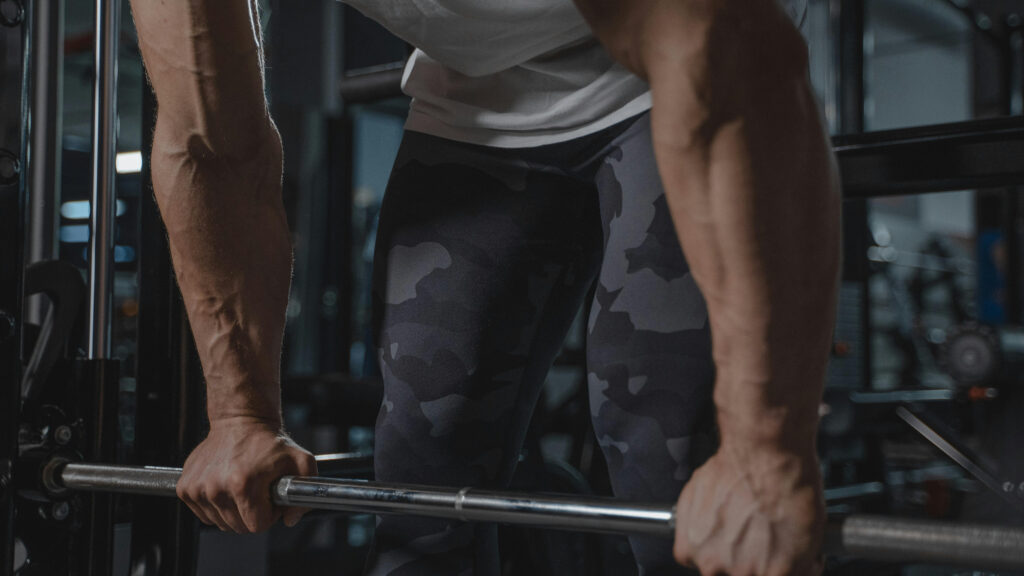
I occasionally use lifting straps, especially during stiff-leg deadlifts, to ensure grip strength doesn’t limit the target muscle.
Lifting Straps. Some people prefer simple loop-style straps, others like fully wrapped versions. I’ve used both, but find that ORANGE FOREST’s are so much more efficient to use as you don’t have to wrap it all the way around the bar/handle:
Maintaining grip strength is something I pay attention to outside the gym as well. It’s a massive advantage to have strong forearms for BJJ, so I make sure I only use straps when needed. If you want to read more about what can be used to increase grip strength, you can check out Grip Strength Training for BJJ.
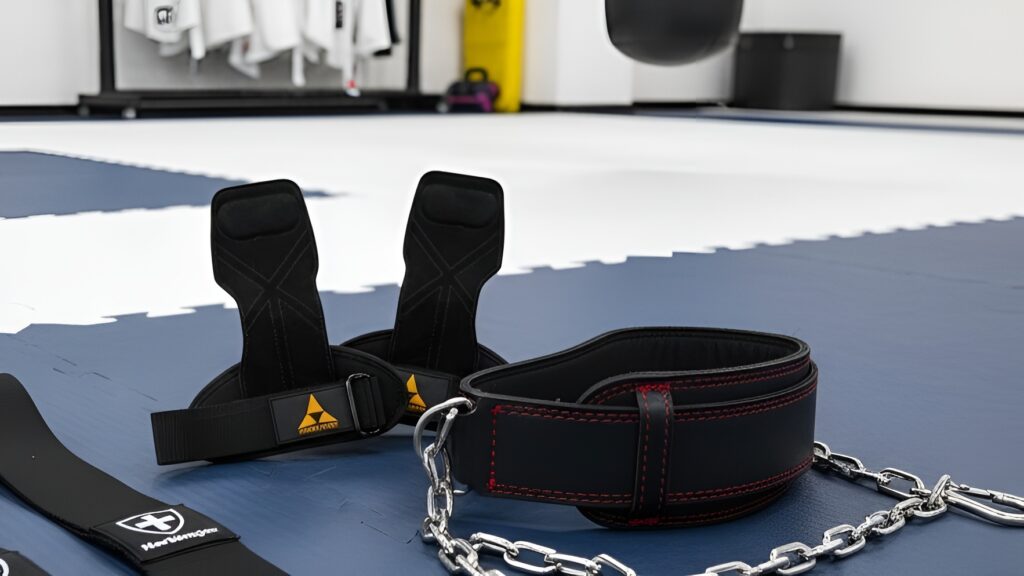
For weighted pullups and dips, I use a chain dip belt:
These aren’t mandatory, just tools that let me progressively overload safely.
My Workout Structure
I rotate between variations to avoid plateaus and keep joints healthy.
Below is the exact structure.
Chest & Back Routine A
Superset 1
- Bench Press or Incline Bench (I alternate each time I come to this workout, or depending on whether I have a spotter or not)
- Uni-lateral High Angle Rows (If you find the handles of the machine awkward to hold, like me, use the handle attachment that you would use on cable machines and put it over the handle of this machine. This way you can use whatever grip feels natural)
Superset 2
- Incline DB Press or Flat DB Press (hit the opposite part of the chest than you did in superset 1. E.g. If you did Regular bench press, do incline here, and vice-versa if the other is true)
- Mid Row Cable Machine
Superset 3
- Pec Dec Machine
- Rear Delt Fly (I do it on the same Pec Dec Machine)
Chest & Back Routine B
Superset 1
- Uni-Lateral Chest Press Machine or Incline DB Press (alternate each session)
- Pullups (weighted vest/belt optional)
Superset 2
- Incline DB Press (hit the opposite part of the chest than you did in superset 1)
- Cable Mid Row
Superset 3
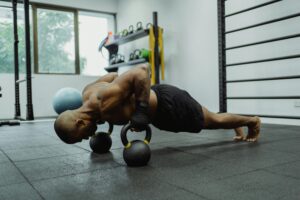
- Ring Pushups (Myo-Match Style – Here you are going to do as many reps as possible until you hit failure on your first set. On your following 2 sets, you are going to aim to hit the same number of reps as you did in your first, with as little number of mini sets as you can, only resting 5 seconds in-between them)
- Straight Arm Lat Pulldowns (I use a narrow cambered bar attachment)
Chest & Back Routine C
Superset 1
- Chest Dips (either bodyweight, with a weight belt, or assisted)
- Hammer Chin Ups (either bodyweight, with a weight belt, or assisted)
Superset 2
- Smith Incline Bench
- Mid Row or High Iso Rows (I alternate depending on what I feel like doing)
Superset 3
- Rope Rear-Delt Face Pull
- Elevated Deep Pushups (Myo Match)
Legs & Shoulders Routine A
Superset 1
- Hamstring Cable Curls
- Seated DB Shoulder Press
Superset 2
- Squats (I use a wedge under my heals to get a deeper stretch and target my quads more)
- Incline-Supported DB Shoulder Fly (set the bench at a, closer to vertical, incline, and lay your chest on it as you do your flies. I put a weight in front of the bench so that it doesn’t slide when I’m leaning on it.
Superset 3
- Leg Press
- Cable Lateral Shoulder Raises
Legs & Shoulders Routine B
Superset 1
- Stiff-Leg Deadlift (Lifting straps optional here. I use them most of the time here because I don’t want my focus to be on hitting my hamstrings as well as possible, as oppose to on my burning forearms)
- Iso Shoulder Press
Superset 2
- Hack Squat (GO AS DEEP AS POSSIBLE)
- Cable Lateral Shoulder Raises
Superset 3
- Quad Extensions
- Supported Handstand Shoulder Press (Myo Match)
What Made the Biggest Difference
This style of training improved:
- Overall strength
- Shoulder durability
- Posterior chain engagement
- Stability under fatigue
- Injury resistance
But the biggest factor wasn’t exercise selection.
It was consistency and progressive overload.
If your goal is to improve your BJJ outside of the gym and from the convenience of your own home, check out our article on the Best BJJ Home Training Equipment.
The Real Secret: Consistency Over Complexity
There’s nothing revolutionary about this program.
No trendy splits.
No optimisation spreadsheets.
No biohacking.
Just:
- Progressive overload
- Smart exercise pairing
- Time efficiency
- Showing up every week
- AND RECOVERY! (Check out The Best BJJ Recovery Gear for Training More and Hurting Less)
That’s what built the muscle.
Final Thoughts (How this Program Made My BJJ Better)
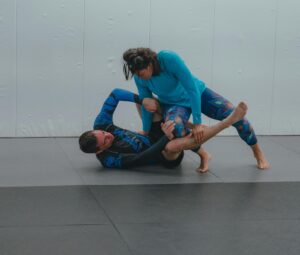
Putting on around 5kg through this program didn’t magically make me technical overnight, but it absolutely changed how I felt on the mats. I noticed I could maintain posture longer, resist being moved off balance more easily, and apply pressure without fatiguing as quickly. Stronger legs helped my base, a stronger back improved pulling mechanics, and grip-focused training translated directly into more confidence in scrambles and control positions. Just as importantly, I felt more durable, less worn down after sessions and better able to recover between rounds. For me, this wasn’t about chasing size for aesthetics. It was about building physical capacity that supports technical training rather than competing with it.
Pingback: What I Wish I Knew Before My First 3 Months of BJJ